Ask a paint manufacturer how long an exterior paint job should last and they'll say seven to ten years, sometimes more. That's a fair number for a well-prepped house in a mild climate. Boulder County and the rest of the Front Range are not a mild climate, and most of the exteriors we're asked to look at are showing their age at five to seven years — sooner on the south and west faces.
The reason is mostly the sun. At 5,000 feet there's about a quarter more ultraviolet light than at sea level, and UV is what breaks paint down: the binder that holds the pigment together degrades, the surface goes chalky, and the color fades. Add the temperature swings — a January day can go from below freezing to sixty and back — and the siding underneath expands and contracts enough to crack a brittle old film. Then hail comes through and knocks off whatever was loose. The result is that the same paint job lasts noticeably longer in Ohio than it does in Boulder County.
What decides how long yours lasts is, in order: the prep, the coating, and the exposure. Prep is the big one. Paint over chalk, dirt or loose old paint and it will let go in a year or two no matter what it cost. Washed, scraped, sanded, caulked and primed properly, the same paint bonds to the surface and lasts as long as the coating itself is designed to. The coating matters second: a top-tier exterior acrylic with good UV resistance really does outlast a builder-grade one by years, and it costs a small fraction more on a job where labor is most of the price. Exposure is what you can't change — a south-facing wall with no shade will always need attention before the north side.
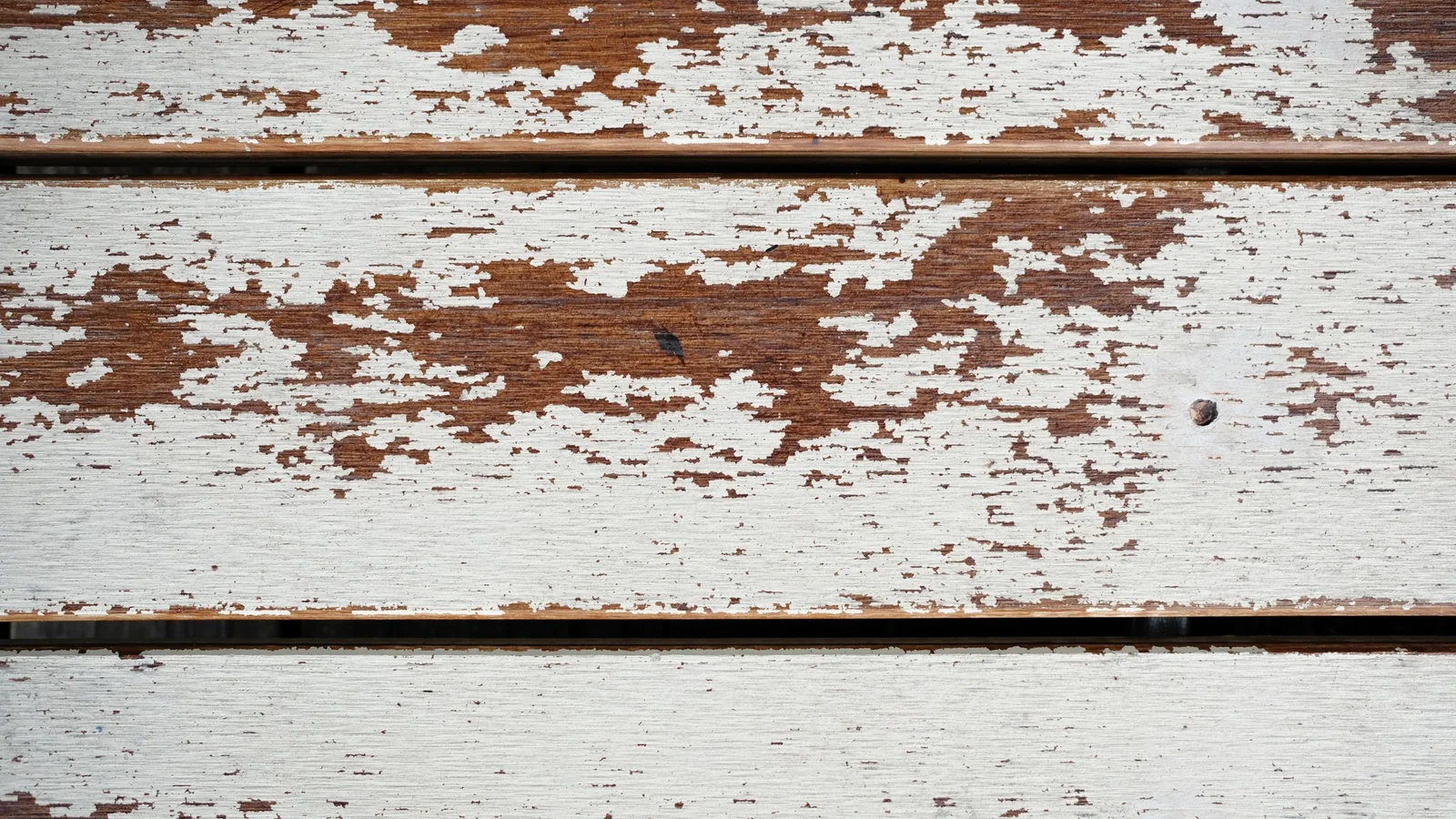
The signs it's due, in the order we usually see them: the color has faded and gone flat, especially on the sunny sides; you can wipe the wall and get a chalky residue on your hand; the caulk at the trim, windows and siding joints has cracked or pulled away; there are hairline cracks in the paint film, often following the grain on wood siding; and finally, paint is peeling or flaking, which means water is now getting behind it. Chalking and faded color are cosmetic. Failed caulk and peeling are not — they let water into the siding and the framing, and that's where the expensive repairs come from.
There's a real cost to waiting. A house repainted while the old paint is faded but sound needs a wash, a light scrape and prime on any bare spots, and it's ready. A house that's been left until it's peeling needs a lot of scraping, sanding, wood repair and spot-priming before a drop of finish paint goes on — that's more labor and a higher price, and it's the same house. Repainting on time is cheaper than repainting late.
Between repaints, two things help. Wash the house once a year with a garden hose and a soft brush to get the dirt and pollen off; dirt holds moisture and speeds up the breakdown. And walk around it every spring looking at the caulk — a tube of exterior caulk and an afternoon at the windows and trim joints can buy a couple of years before the full job.
If you're not sure where your house is on that timeline, that's what the free estimate is for. Call Boulder Paint at (720) 278-4927. We'll walk the whole exterior with you, tell you honestly whether it needs paint this year or can wait, and put the scope and the price in writing.